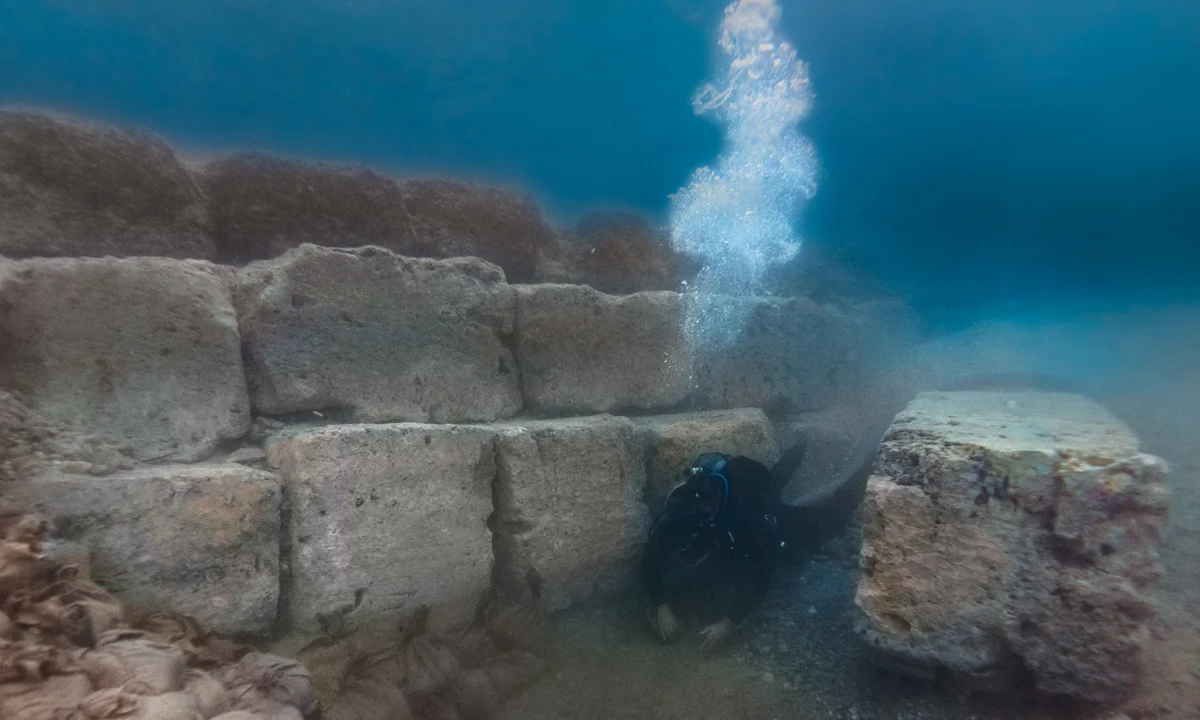
A Giant Discovery Under the Waves
Marine scientists in France have found something amazing (France’s Ancient). They discovered a huge wall under the ocean. This wall is very, very old. It dates back to about 5,000 BC. That means it is about 7,000 years old. This makes it a great discovery for history.
The wall has found off the coast of Brittany. This area is in western France. It has near a small island called Île de Sein. This massive stone structure is now deep underwater. It tells a hidden story of ancient people.
The Size of the Ancient Structure
This ancient wall is massive. It has the biggest underwater structure ever found in France. The wall is about 120 meters long. That is nearly 400 feet long. Think of it as longer than a soccer field.

The wall is also very wide. It is about 20 meters wide on average. That is about 65 feet across. It stands about 2 meters high. That is over 6 feet tall. The total weight of all the stones is huge. Scientists believe it weighs about 3,300 tons.
How Was the Wall Found?
The wall was first found by a geologist. A geologist studies rocks and land. His name is Yves Fouquet. He was looking at undersea maps. These maps have created with new radar technology.
Mr. Fouquet saw a strange line on the map. This line was 120 meters long. It blocked off a valley under the sea. He knew right away that it was not natural. “It couldn’t be natural,” he said. This clue started the search.
The First Look Underwater
Archaeologists went to explore the area. Their first dives were in the summer. It was hard to see the structure well. Too much seaweed covered the wall.
They went back in the winter. The seaweed had died back then. This allowed them to map the wall correctly. They used special tools to draw the entire structure. They confirmed that the wall has built by humans.
Where Was the Wall Built?
When the wall has built 7,000 years ago, the sea was lower. The wall was not underwater then. It has built right on the shoreline. It would have been between the high tide and low tide marks.

Over thousands of years, the sea level rose. The land around the island changed. The sea slowly covered the wall. Today, the wall sits under about 9 meters of water. That is about 30 feet deep. The island of Île de Sein is much smaller now than it was back then.
Who Built This Huge Wall?
The people who built this wall were part of the Stone Age. This structure is very complex. It must have built by a large and organized society. It took a lot of planning and hard work.
Scientists believe it has built by hunter-gatherers. These people were skillful. They started to settle down in one place. They did this because they found a lot of food nearby. The wall might also have built by the Neolithic people. These people started farming around 5,000 BC.
What Was the Wall Used For?
Archaeologists have two main ideas about the wall’s purpose. Both ideas are exciting.
The first idea is that it was a fish-trap. A fish-trap has a structure used to catch fish. The wall would have blocked off a small bay or inlet. When the tide went out, fish would trapped behind the wall. People could then easily collect the fish for food.
The wall has large stones sticking up. These stones have called monoliths. They stand in two parallel lines. If it was a fish-trap, these stones held a net. The net would have made of sticks and branches.
The Second Idea: A Protective Dyke
The second main idea is that the wall was a dyke. A dyke is a wall built to hold back water. The people might have built it to protect their land. It would have protected them from the rising sea levels.
This shows that the ancient people were smart. They knew the sea was getting higher. They took action to save their land and homes. Whether it was for fishing or for protection, it shows great planning. The structure is so solid that it lasted 7,000 years.
The Mystery of the Monoliths
The wall contains large standing stones. These stones are called monoliths. They stick out above the wall. These stones were placed on the bedrock first. Then, smaller slabs and stones were piled around them. This formed the large wall.
These monoliths are similar to the famous ancient stones of Brittany. Those famous stones are called menhirs. The newly discovered monoliths are even older than the menhirs. This suggests a long tradition. It shows that ancient people had special skills in working with large stones.

Connecting to Lost City Legends
This discovery has caused excitement about local legends. People in Brittany have long told stories of “sunken cities.” The most famous legend is about the lost city of Ys.
Scientists believe these ancient walls could be the source of those stories. When the sea level rose, the land was lost. This loss was a huge event for the people who lived there. They lost their fishing grounds and their homes. This memory stayed alive for thousands of years. It became the legend of a great city lost to the sea.
A Window into Prehistoric Life
This underwater wall is like a window. It helps us see how ancient people lived. It proves they were not simple people. They were organized. They could plan and build very large structures. This changes how we think about the Stone Age.
It shows that climate change has always affected human life. The rising sea forced ancient communities to move. Their great buildings were left behind, hidden by the ocean.
The Future of the Find
Archaeologists will keep studying the wall. They want to learn more about the people who built it. This will look for other objects nearby. They will try to find more clues about its exact use.
This amazing discovery reminds us of how much history is hidden. It is a powerful link to the people of 5,000 BC. They were builders, protectors, and survivors. They left a giant stone message at the bottom of the sea.
Read More Articles Click Here. Read Previous Articles Click Here.
