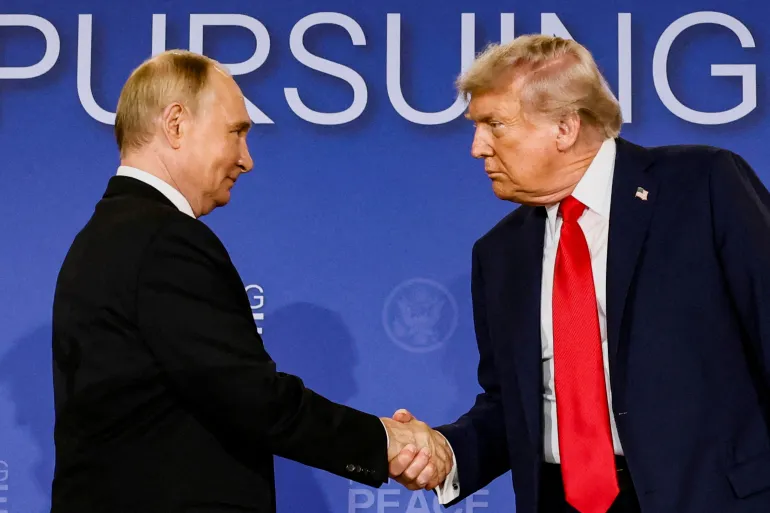
The President of Russia, Vladimir Putin, is in a unique and serious legal position (NATO). The International Criminal Court (ICC) has issued an arrest warrant for him. This warrant is for alleged war crimes related to the deportation of children from Ukraine.
The ICC has located in a city called The Hague. It is in the Netherlands. Any country that is a member of the ICC has a duty to arrest him if he enters their territory.
This situation leads to a serious question: What if Putin’s plane flies over a member country? Could NATO airspace has used to force him to land and sent to The Hague? This is a huge risk. It is a mix of law, politics, and military power. This article looks at what the law says and what the dangers are.
Why Does Putin Have an Arrest Warrant? NATO
The ICC issued the warrant in March 2023. The warrant says that Vladimir Putin is responsible for a war crime. This crime is the unlawful deportation and transfer of Ukrainian children.
Ukrainian children have taken from occupied areas. They have sent to Russia. The ICC says this is against international law. Russia has denied these claims.
The warrant is against a sitting head of state. This is rare and very important. The warrant means that Vladimir Putin is now an international fugitive in the eyes of many countries.

The Power of the Rome Statute
The Rome Statute is the document that created the ICC. This document has signed by 124 countries. These countries have called “State Parties.” Many NATO countries are State Parties to the Rome Statute.
The most important rule for these countries is simple: If a person with an ICC warrant enters their territory, they must arrest them. This duty applies to the country’s land, its ports, and its airspace.
A head of state, like President Putin, usually has special protection, called “head of state immunity.” But the ICC has made it clear: The Rome Statute says this immunity does not apply to ICC warrants for the most serious crimes. The warrant is valid.
The Airspace Challenge: Theory vs. Reality NATO
In theory, the law is clear. If President Putin’s official plane flies over a NATO country that is an ICC member, that country has the legal right and duty to act.
A Foreign Minister from Poland, Radoslaw Sikorski, made this threat very clear. He warned that if Putin’s plane flew over Polish airspace, an independent Polish court might order the government to force the aircraft down. The goal would be to hand the suspect to the court in The Hague.
This idea of a forced landing in NATO airspace is very extreme. The country would need to do several things:
- Identify the Aircraft: They must be sure it is the official Russian presidential plane.
- Intercept: They would send fighter jets to fly next to the plane.
- Force Landing: They would use signals to force the plane to land at a specific airport.
- Execute Arrest: Police or military units would arrest President Putin when the plane is on the ground.
The threat of a forced landing law is very real for countries like Poland, Estonia, and Lithuania. These countries are next to Russia. They are strong members of NATO.
The Massive Political and Military Risk NATO
Why has no one done this yet? Because the risks of arresting the leader of a nuclear-armed country are huge. The political and military challenges make the legal duty very hard to enforce.
1. Risk of War: Russia has already said that any country that tries to arrest President Putin would be committing a “declaration of war.” No NATO member wants to risk a direct military conflict with Russia.
2. NATO Unity: Any single NATO country that forces down the plane would be acting on its own. This could put the entire NATO alliance in danger. NATO would have to decide if that single country has attacked under the Article 5 rule. Article 5 says an attack on one member is an attack on all.
3. Safety of the Aircraft: International law is very careful about the safety of any aircraft, even military ones. Forcing a large plane to land is dangerous. An accident could kill everyone on board. This would be a huge global crisis.
4. Travel Avoidance: President Putin and his staff are very careful. He almost always avoids traveling over ICC member countries. His trips have now planned only over neutral countries or countries that are not members of the ICC (like Russia’s allies).

The Current Situation: Avoiding the Risk NATO
For now, the legal duty of Putin Arrest NATO Airspace is a huge symbol. It shows the world that a sitting leader faces accountability. But in practice, the risk is too high.
The immediate action we see in NATO airspace is different. NATO is using its jets to stop Russian military aircraft and drones from entering its territory. The airspace has heavily defended. The NATO focus is on protecting its borders from Russian testing and threats, not on arresting heads of state.
The threat of a forced landing remains in the background. It is a card that a NATO member could play. But it is a card that has the power to start a much larger conflict.
Putin ICC warrant :
The Putin ICC warrant means his travel options have permanently limited. The legal framework of the Rome Statute forces ICC members to arrest him if he enters their land or flies over their NATO airspace.
The law says yes, his plane could forced to The Hague. But the political reality says no, not without the risk of starting a major European war. The threat made by the Polish Foreign Minister highlights the tension. It shows the legal duty that exists.
The result is that President Putin remains a powerful, global leader. But he has also an international fugitive whose movements have severely limited. For the safety of the world, NATO countries will likely choose the path of caution and let him travel only where he cannot arrested. This avoids the risk of a dangerous confrontation in the skies.
Would you like me to research other high-profile individuals with ICC arrest warrants who have prevented from traveling?
Read More Articles Click Here. Read Previous Article Click Here.
