The massive Bagram Air Base in Afghanistan was once the biggest US military hub (The Bagram Gambit) in the region. After US troops left in 2021, the Taliban government took control of it.
But the story did not end there. United States President Donald Trump publicly demanded that the Taliban hand the huge base back to the US. He warned that “BAD THINGS ARE GOING TO HAPPEN!!!” if they refused. This strong demand became known as the Bagram Gambit.
This one demand caused a rare and huge political event. It brought together three of the world’s most important countries: China, Russia, and India. These three countries, who often disagree, all stood together to oppose any US return to Bagram. This unity shows just how much the base matters in the new global power game. The Bagram Gambit
The Threat: Why Trump Wanted Bagram Back The Bagram Gambit
President Trump’s desire to reclaim Bagram was a bold and strategic move. He gave three main reasons for wanting the base back:
- To Watch China: This was the most important reason. Bagram is located near Central Asia and China’s Xinjiang province. Trump said the base was “one hour away from where China makes its nuclear weapons.” (This distance is not correct, but the meaning is clear). The US wants the base for surveillance. This means they could fly spy planes and collect intelligence on China’s western military sites. The Bagram Gambit
- To Show Strength: The way the US left Afghanistan in 2021 was seen by many as a failure. By trying to get Bagram back, Trump wanted to reverse that image. He wanted to show the world that the US was still strong and ready to project military power.
- To Fight Terror: The base offers a quick place to launch counterterrorism missions. Bagram’s long runways can handle the largest planes. This makes it vital for military operations across the region.

The Three Powers Unite: The Moscow Format The Bagram Gambit
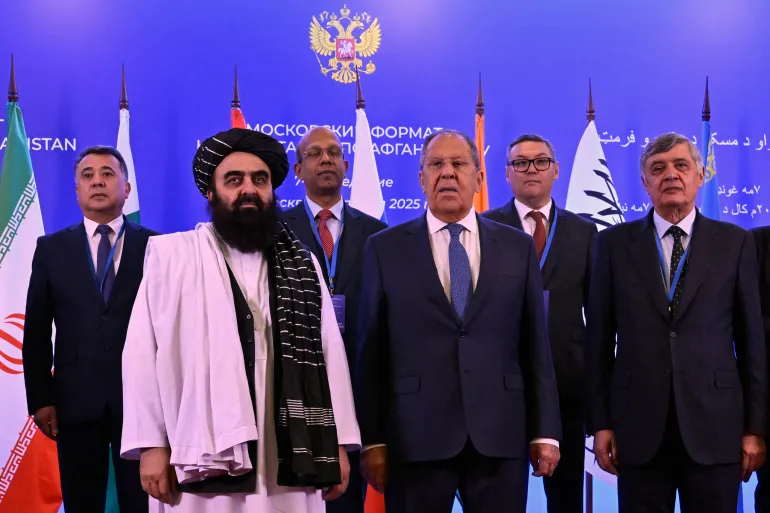
The opposition from China, Russia, and India was clear and united. It happened at a major meeting called the Moscow Format Consultations on Afghanistan. At this meeting, envoys from many regional countries, including India, China, Russia, and even the Taliban, released a joint statement.
The statement was a direct rejection of Trump’s demand. It said the countries found it “unacceptable” for any nation to put its military bases in Afghanistan or its neighbors. This was a rare moment of agreement among these powerful nations. The Bagram Gambit
Here is why each country stood against the US:
China (Beijing): The Immediate Threat
China saw the US return to Bagram as a direct threat to its security.
- Spying on Xinjiang: China knows the base would be used to spy on its Xinjiang region. This area holds sensitive military sites. A US base nearby would force China to spend huge amounts of money on defense.
- Protecting Trade: The base is also close to the major Belt and Road Initiative (BRI) trade routes. China does not want a US military presence that could threaten its massive global trade plans.
Russia (Moscow): The Regional Boss
Russia sees Central Asia as its own vital region. It has worked hard to keep US influence out.
- Undermining Influence: A large US base at Bagram would mean the US could easily monitor Russian military activities in Central Asia. It would weaken Russia’s position as the main security partner for the countries there.
- No Western Expansion: Russia wants a peaceful Afghanistan that is friendly to Moscow, not aligned with the West. A US military base would be a huge step backward for Russia’s goals.

India (New Delhi): The Regional Player
India is often a US partner. But on Bagram, it chose to stand with its regional neighbors.
- Respecting Sovereignty: By joining the opposition, India showed the Taliban government in Kabul that it respects Afghanistan’s sovereignty. This helps India build a new, working relationship with the Taliban.
- Supporting Consensus: India’s move showed that it cares more about the regional consensus on Afghanistan than on supporting the US demand. India does not want regional politics controlled by a faraway power.
The Lesson of Sovereignty The Bagram Gambit
The Bagram Gambit was a classic example of President Trump’s powerful, direct style. However, the plan failed to achieve its goal. The Taliban government immediately rejected the demand. They said the US had promised to stay out of their affairs in the 2020 Doha Agreement.
The most important result of this demand was the unity it created. The image of the US military returning to the heart of Asia was enough to make long-time rivals—China, Russia, and India—stand together.
The entire event was a powerful lesson. It showed the US that, in the new global order, three of the world’s most influential nations will join forces to protect the principle of national sovereignty and limit Western military power in their part of the world. Bagram remains under Taliban control. It is now a symbol of this shift in global power.
Read More Articles Click Here. Read Previous Article Click Here.
